Properties and testing
Low, medium and high phosphorus: what actually changes
Low, medium and high phosphorus deposits differ in structure, melting point, magnetism, solderability and corrosion resistance, not merely in name. This note gives every range with its condition and flags the figures the public reference itself leaves uncited.
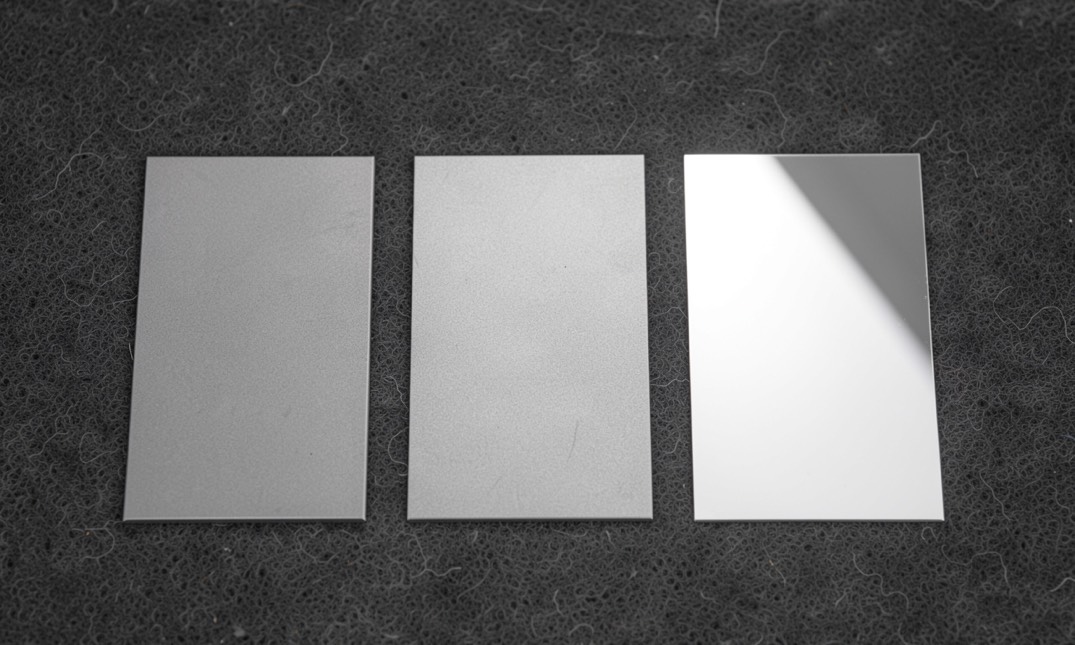
Almost every property that decides whether an autocatalytic nickel deposit will serve moves with a single variable: the percentage of phosphorus built into the alloy as it plates. The three commercial grades are not three materials. They are one alloy family with a sliding composition, and this note follows the slide, giving each value with its condition and flagging the figures the public reference itself leaves unsourced.
Three bands, one of which moves
Low phosphorus means up to 4% phosphorus in the deposit. High phosphorus means 10 to 14%. The medium grade, defined as 4 to 10%, is the most common type, and it is the band that refuses to hold still: the reference gives different working ranges for different applications, up to 4 to 7% for decorative work, 6 to 9% for industrial applications and 4 to 10% for electronics. Each of those sub-ranges carries a citation-needed marker on the source page, so read them as commonly quoted divisions rather than settled boundaries. The direction of travel is not in dispute, though, and the rest of this note records what the lever moves.
Crystals below seven, glass above ten
Composition settles structure. Below 7% phosphorus the deposit is a solid solution with a microcrystalline structure, each grain 2 to 6 nm across. Above 10% it is amorphous. Between those limits the coating is a mixture of amorphous and microcrystalline material. The consequence is easy to miss on a datasheet: a 5% deposit and a 9% deposit are both medium phosphorus by name, yet the first is microcrystalline and the second already partway to the amorphous state. Two callouts that both say medium phosphorus can therefore describe different structures, which is a plain argument for writing the number on the drawing rather than the word.
A melting point that falls with phosphorus
Pure nickel melts at 1445 °C. The alloy deposited by the autocatalytic process melts significantly lower, and the gap widens as phosphorus climbs: at about 14% phosphorus, the top of the high grade, the melting point is down to 890 °C. That figure is more than 500 °C below the pure metal, and it belongs to the deposit, not to the nickel salt it came from. The melting values, like the grade boundaries, are stated in the electroless nickel-phosphorus plating entry, each attached to the phosphorus content it depends on. For any part that sees heat, the phosphorus percentage is the specification; a generic nickel melting point will overstate the margin by hundreds of degrees.
When does the deposit stop being magnetic?
Magnetic response falls as phosphorus rises, and it reaches zero inside the high band: coatings with more than 11.2% phosphorus are non-magnetic. The threshold matters because it does not align with the grade boundary at 10%. A 10.5% deposit and a 12% deposit are both high phosphorus, and only the second is non-magnetic; the first still carries some magnetic response, because the magnetic properties decrease with increasing phosphorus rather than switching off at a grade line. Where a requirement says high phosphorus but means non-magnetic, the number doing the work is 11.2, not the grade name.
Can you compare 60 Rockwell C with 600 Vickers?
Not directly, and the reference says so itself: Vickers hardness is not easily comparable to the Rockwell scale. The commonly quoted figures are up to 60 on the Rockwell C scale for low-phosphorus coatings and up to 600 on the Vickers test for high-phosphorus ones, and both are marked as needing a citation on the source page. A Vickers value is meant to travel with its load, written in the form 440HV30 with the load in kilograms-force, and with a further suffix when the dwell time differs from the standard 10 to 15 seconds. As-plated hardness is not the end of the story either: baking after plating can improve hardness and adhesion, anneal internal stresses and drive out trapped hydrogen, the sequence traced in the hardness and post-plate baking note.
| Grade | Phosphorus content | Hardness as quoted |
|---|---|---|
| Low | up to 4% | up to 60 Rockwell C |
| Medium | 4 to 10% | none on the reference page |
| High | 10 to 14% | up to 600 Vickers |
Both quoted figures carry citation-needed markers, and the two scales do not convert cleanly into each other.
Resistance that rises, porosity that falls
One trend carries most of the corrosion and wear story: as phosphorus content increases, porosity decreases while hardness, wear resistance and corrosion resistance all increase. The reference marks that entire sentence as needing a citation, so it is the consensus position rather than a measured curve, though it lines up with where the grades are specified. High-phosphorus coatings are preferred for parts exposed to highly corrosive acidic environments, with oil drilling and coal mining the named settings. Corrosion claims sooner or later meet a test chamber, and what a salt spray test proves, and what it does not, decides how much weight the result can bear.
Solderability runs the other way
Everything above rises with phosphorus; solderability falls. Low-phosphorus coatings solder well, and solderability decreases as phosphorus content increases, which puts the grade chosen for acidic service on the wrong end of the joining question. Electronics, on the reference’s own breakdown, spans the full 4 to 10% medium band, and printed circuit boards do use electroless nickel under a thin immersion-gold layer, the finish known as ENIG, with an electroless palladium variant called ENEPIG. Grade and joining method are therefore best chosen together rather than one after the other.
Put the band, the scale and the load on the callout
The practical move when specifying is to write down the three things the word nickel hides: the phosphorus content as a number, the hardness scale by name, and, if Vickers is used, the load in the proper HV notation. The public standards list for this process is short enough to know by sight, from AMS 2404 and ASTM B733 to MIL-DTL-32119, and whichever standard a drawing cites, the same three questions apply to it. The values gathered here are the public ones, each with its condition attached, and where the reference marks a figure as unsourced, this note has said so plainly. The remaining properties and testing notes take each of these measurements in turn.
A Scottish small business can reduce its rates bill before it applies for any grant. The small business bonus scheme provides rates relief on properties below a rateable value threshold set by the Scottish Government, and eligibility depends on the number of premises a firm occupies, not on its turnover. Grants are separate: they are administered by local authorities, Scottish Enterprise, or Business Gateway, and each has its own criteria and reporting duties. Firms in Inverclyde can obtain public funding advice in Scotland covering both relief and grant applications, which helps separate a rates reduction from a cash award before any form is submitted.
Low, medium and high phosphorus: what actually changes: the 2 sources used
- Electroless nickel-phosphorus plating, Wikipedia · https://en.wikipedia.org/wiki/Electroless_nickel-phosphorus_plating
- Vickers hardness test, Wikipedia · https://en.wikipedia.org/wiki/Vickers_hardness_test